SpeakersMag

D-Box vs IMAX- Detailed Comparison with Table

By Robert Jones · 2022-06-09
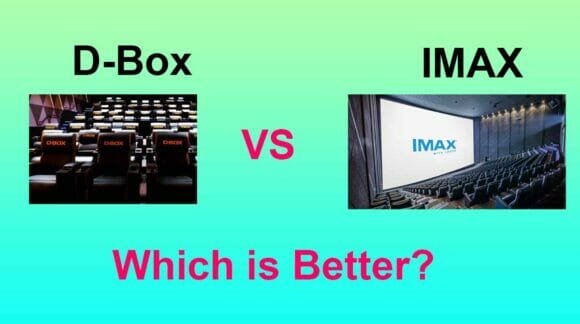
D-Box vs IMAX- Detailed Comparison with Table

Right, you've heard about D-Box and IMAX, seen the fancy trailers. But are they the same? Not by a long shot. Let's cut through the marketing fluff and talk about what you actually get for your hard-earned cash.

Right, you've seen the big screens, heard the booming sound. But what about *feeling* the film? That's where things get interesting with D-Box and IMAX. People often lump them together, but they're chalk and cheese, really. Let's clear a few things up. **Quick Verdict:** D-Box adds a fun, physical dimension to films; IMAX is all about a huge, immersive visual and audio experience. Don't confuse 'em. ### Who it's for: * **D-Box:** People who want an interactive, tactile experience with their films. If you love a bit of a rumble and a shake, this is for you. Great for action, sci-fi, and even some horrors. * **IMAX:** Film purists who crave the biggest picture, crystal-clear visuals, and truly enveloping sound. Ideal for blockbusters, documentaries, and anyone who wants to feel like they're *in* the movie. ### Who should skip it: * **D-Box:** If you get motion sickness easily, prefer a static viewing experience, or find constant movement distracting. Also, probably not for a quiet drama. * **IMAX:** If you're on a tight budget (it's often pricier), or if you're just looking for a casual cinema trip and don't care for the sheer scale. ![D-Box vs IMAX- Detailed Comparison with Table](https://speakersmag.co.uk/wp-content/uploads/2023/02/D-Box-vs-IMAX-Which-is-Best.jpg) *D-Box vs IMAX- Detailed Comparison with Table — tested in the SpeakersMag workshop.* ## What's All This D-Box Business Anyway? Alright, let's start with D-Box. Imagine a cinema seat that's alive. That's pretty much it. It's not just a fancy vibrating chair; it's got a motion code, a bit like software, that's specifically programmed to sync up with what's happening on screen. Explosions? You feel a jolt. A car chase? Your seat tilts and rumbles. A spaceship taking off? You're going to get some serious vibration. I first came across D-Box properly a few years back. Went to see a Bond film – can't remember which one now, they all blur into a flurry of Aston Martins and improbable escapes. I was a bit sceptical, honestly. Thought it'd be a gimmick, a bit like those old 4D rides at theme parks where you get sprayed with water and a bit of air puff. But no, it was actually rather clever. The movements were surprisingly nuanced. It wasn't just on or off; there were subtle tremors, gentle rocking, sharp jolts. It added a real, physical layer to the experience. The technology works by actuators – little motors, basically – built into the chairs. These actuators respond to cues in the D-Box motion track, which is created by motion designers who dissect the film scene by scene. They decide exactly when and how your seat should move. It's quite an art, I reckon, getting it just right so it enhances, rather than detracts from, the film. ## And IMAX? That Big Screen, Big Sound Thing? Now, IMAX. This is a different beast entirely. We're talking about sheer scale here. Massive screens, often curved, that fill your peripheral vision. And the sound? Oh, the sound. It's something else. IMAX has always been about immersion through size and acoustic precision. My first proper IMAX experience was probably back in the late 90s, early 2000s. I was working on some loudspeaker designs for a small cinema chain, and they sent me to a few different sites to check out the acoustics. One of them had an IMAX screen. Stepped in, and my jaw just dropped. The screen was enormous, like looking into another world. The sound system was incredible too. Not just loud, but incredibly clear, with pinpoint accuracy for effects moving around the auditorium. You'd hear a helicopter fly overhead and swear it was above you, not just coming from a speaker at the side. IMAX started off with huge format film cameras, producing negatives much larger than standard 35mm. This meant incredibly detailed images when projected. Nowadays, many IMAX theatres are digital, using dual 4K projectors to achieve that stunning clarity and brightness. But the principle remains the same: a massive picture, filling your view, making you feel like you're right there. And the sound, as I mentioned, is crucial. IMAX uses a custom-designed sound system, calibrated precisely for each theatre. We're talking laser-aligned speakers, precise room equalisation. The goal is a uniform sound field, so every seat gets pretty much the same top-notch audio experience. It's not just about more speakers; it's about how they're integrated and managed. ## D-Box vs. IMAX: The Nitty-Gritty Comparison Right, so we've established they're different. Let's get down to brass tacks and see how they stack up directly. It's not really a case of one being "better" than the other, more about what you're after from your cinema trip. ### Visuals * **D-Box:** No direct impact on visuals. The picture quality will be whatever the standard cinema screen is offering. If it's a bit fuzzy or the colours are off, D-Box won't fix that. It's purely about the seat motion. * **IMAX:** This is where IMAX shines. The screens are significantly larger, often going from floor to ceiling and wall to wall, sometimes even curved. This fills more of your vision, giving you that truly immersive feeling. Picture clarity is usually exceptional too, especially with their dual projector setups. Some films are even shot with IMAX cameras, meaning you get an expanded aspect ratio, showing you more of the scene than a regular cinema release. ### Audio * **D-Box:** Again, D-Box doesn't mess with the audio. You get the cinema's standard sound system. It could be great, it could be a bit tinny. The D-Box chairs themselves are quiet, thankfully, so they don't add distracting mechanical noises to the soundtrack. * **IMAX:** Ah, the sound. IMAX has a proprietary audio system. Often described as "uncompressed, multi-channel digital surround sound." What does that mean for you? It means powerful, precise, and incredibly immersive sound. You'll hear details you'd miss elsewhere. The bass is usually phenomenal, but it's tight and controlled, not just boomy. It really does put you in the middle of the action. ### Motion * **D-Box:** This is its unique selling point. The seats move. They tilt, they pitch, they heave, they vibrate. These movements are specifically programmed to synchronise with the on-screen action. It's designed to simulate motion, impact, and texture. Think of it as a haptic feedback system for your whole body. Some folks absolutely love it; it adds another sensory layer. * **IMAX:** No motion in the seats here. The immersion comes purely from the huge visuals and powerful audio. You're rooted to the spot, just absorbing the spectacle. ### Immersion Factor * **D-Box:** The immersion comes from the physical sensation. You're actively feeling the film. It engages another sense, pulling you deeper into the action. For certain types of films, like a chase sequence or a space battle, it can be incredibly effective. * **IMAX:** The immersion here is visual and auditory. The sheer size of the screen and the quality of the sound swallow you up. It removes the distractions of the cinema around you, focusing your attention entirely on the film. It's less about feeling *impacts* and more about feeling *part of* the environment. ### Price & Availability * **D-Box:** Tends to be an add-on. You pay for your regular cinema ticket, then an extra few quid for the D-Box seat. Availability is growing, but it's still not in every cinema. It's usually found in some of the bigger multiplexes in larger towns and cities. * **IMAX:** Generally, an IMAX ticket is more expensive than a standard one, but it's usually a flat fee rather than an add-on. IMAX theatres are more widespread than D-Box, especially in bigger cities, but true "Liemax" (IMAX branding on smaller, converted screens) can be a bit of a letdown if you're expecting the full monty. ### Comfort * **D-Box:** This is subjective. Some people find the constant movement tiring or even nauseating after a while. The seats themselves are usually pretty good, but you're not getting a static, relaxed experience. If you like to sink into your seat and not move for two hours, D-Box might not be for you. * **IMAX:** Standard cinema seats, usually quite comfortable. The main thing that might affect comfort is being too close to the screen, which can lead to neck strain if you're constantly looking up. But generally, it's a standard, comfortable cinema experience, just on a much grander scale. ## The Real-World Experience: My Take From my perspective, having fiddled with speaker setups and room acoustics for decades, the sound element of IMAX is what truly blows me away. The clarity, the dynamic range, the way effects move around you – it’s a masterclass in audio engineering for a public space. It’s not just loud; it’s *clean* loud. That’s a massive distinction. Many a time I’ve been to a regular cinema where the bass is just a muddy mess, shaking the room without any real definition. IMAX rarely, if ever, suffers from that. They really do put the effort in with calibration. D-Box, on the other hand, is a different beast. It’s like adding an extra controller to a video game. It’s fun, it’s engaging, and for certain films, it genuinely adds to the excitement. I took my nephew to see a Marvel film in D-Box once, and he absolutely loved it. The seat jolting with every punch and explosion? Made him feel like he was right in the middle of it. For a lot of people, especially younger audiences, that tactile feedback is a huge draw. But for me, personally, after the initial novelty wears off, I sometimes find myself wishing the seat would just stay still for a bit. My back isn’t as young as it used to be, mind. ### Filmmakers' Intentions This is a big one for me. When a director shoots a film with IMAX cameras or specifically masters it for an IMAX release, they're doing so because they want you to see and hear it in that specific, grand way. Christopher Nolan is a big proponent of IMAX, for example. He uses those huge cameras to capture incredible detail and scale, knowing it'll fill those massive screens. You're getting the film as close to the creator's vision as possible. D-Box isn't usually part of the filmmaker's original vision in the same way. It's an aftermarket enhancement, if you will. The motion coding is done by D-Box engineers, not the film's director. Now, that's not to say it's bad, not at all. It's just a different philosophy. It's adding an interactive layer to a finished product, rather than being an integral part of its creation. ## Comparison Table: D-Box vs. IMAX | Feature | D-Box | IMAX | | :---------------- | :------------------------------------- | :----------------------------------------- | | **Core Experience** | Interactive seat motion | Large screen, immersive visuals & audio | | **Visual Impact** | None (standard cinema screen) | Significantly larger, sharper, brighter | | **Audio Impact** | None (standard cinema sound) | Proprietary high-fidelity, multi-channel | | **Motion** | Seats move (tilt, heave, vibrate) | None (static seats) | | **Immersion** | Physical, tactile, engaging | Visual & auditory, all-encompassing | | **Content** | Standard films with D-Box motion track | Specially formatted/shot films, documentaries | | **Price** | Add-on cost to standard ticket | Premium ticket price | | **Availability** | Growing, less common than IMAX | Widespread in major cities | | **Best For** | Action, sci-fi, thrillers, dynamic scenes | Blockbusters, documentaries, visual epics | ## Which One Should You Choose? Or Both? If you've got the choice and the cash, why not try both? They offer completely different experiences. If you're heading out to see the latest superhero flick with explosions every other minute, D-Box might give you a real kick. It adds a bit of fun, a bit of novelty. But if it's a film where the cinematography is a big deal, or the sound design is critical, then IMAX is usually the way to go. Think epic sci-fi or a sweeping historical drama. That's where the sheer scale of IMAX really makes its mark. It's about being transported, rather than physically jolted. For me, if I had to pick just one for a really important film, especially one with a fantastic soundtrack, it would be IMAX every single time. The audio clarity and visual grandeur are what I appreciate most. But if I'm after a bit of a laugh and a truly unique experience with mates, D-Box has its place. You know, for those brain-off, popcorn-in-mouth type of films. ## FAQ ### Q: Can D-Box make you feel sick? A: It certainly can for some people. If you're prone to motion sickness, or find simulator rides a bit much, D-Box might not be for you. The movements can be quite intense at times. Best to try it on a film you're not too invested in first, just in case! ### Q: Is IMAX really worth the extra money? A: For most big-budget films, particularly those shot using IMAX cameras or specially remastered for the format, I'd say yes. The visual impact and superior sound are noticeable and genuinely enhance the viewing. For smaller, dialogue-heavy films, probably not as much. ### Q: What's the difference between "true" IMAX and "Liemax"? A: "True" IMAX refers to purpose-built auditoriums with gigantic screens (70-foot plus), often 70mm film projection capability, and a full, bespoke IMAX sound system. "Liemax" is a colloquial term for standard cinemas that have been converted to IMAX, usually with smaller screens and sometimes less advanced projection and sound than a dedicated IMAX. They're still good, but not the full, original experience. ### Q: Do all films have D-Box support? A: No, only a selection of films are coded for D-Box. Usually, it's the big Hollywood blockbusters – action, adventure, sci-fi. You'll need to check your local cinema's listings to see which films are available in D-Box format. ### Q: Does D-Box affect the comfort of the seats? A: The seats themselves are usually quite well-padded and comfortable. However, the constant motion might be something some people find distracting or tiring over a long film. It's not a passive, slouch-back kind of comfort; it's an active, engaging experience. ## Final Word So there you have it. D-Box and IMAX are both trying to push the boundaries of the cinema experience, but they do it in fundamentally different ways. IMAX is about delivering the most massive, pristine audio-visual spectacle possible, staying true to the director's grand vision. It's a passive, but utterly engulfing, experience. D-Box, on the other hand, wants to get you physically involved, adding another sensory layer to the film. It's an active, interactive sort of fun. Neither is inherently "better" than the other; it really boils down to what you fancy on a particular cinema trip. If you're after pure escapism through sight and sound, IMAX is your go-to. If you want a bit of a ride with your movie, a literal shake-up, then give D-Box a whirl. Just don't go expecting your seat to rumble in an IMAX, or a massive screen in a D-Box without checking first. You'll only be disappointed, and nobody wants that after shelling out good money for a ticket. Get out there and try 'em both, see which one tickles your fancy. It's all about enjoying the film, isn't it?", seoTitle=