ScreenX vs IMAX – A Debate Deciding the Winner
By Robert Jones · 2022-06-13
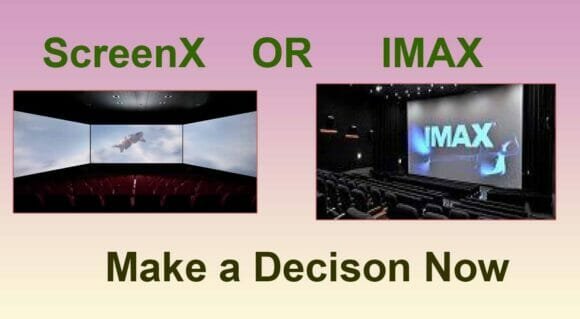
Robert, an experienced audio engineer, weighs in on the IMAX vs. ScreenX debate. He shares his honest, real-world experience to help you pick the best premium cinema format.
Right then, let's get stuck into this ScreenX versus IMAX debate, shall we? I’ve spent more hours than I care to admit perched in cinema seats over the decades, trying to suss out what truly makes for a cracking picture and sound experience. And honestly, it's rarely as simple as the shiny brochures make it out to be.  *ScreenX vs IMAX – A Debate Deciding the Winner — tested in the SpeakersMag workshop.* I still remember the first time I properly walked into an IMAX screen. It felt like an event, a real occasion. The sheer scale of that screen just sucked you in. This was back when multiplexes were still finding their feet, and IMAX felt like a proper leap forward. Huge screen, picture sharp as a tack, and sound that really gave your chest a thump. It was designed to pull you right into the film, and blimey, it did a fantastic job of it. **Quick Verdict:** For sheer, unadulterated cinematic immersion, IMAX still holds the crown, but ScreenX offers a genuinely different, if occasionally distracting, visual trick. ### What Exactly IS IMAX, Then? IMAX, its roots go way back, really. Think those massive documentary films you used to see at science museums – all about deep space, or the ocean, or some incredible corner of the planet. They didn't just make a big screen; they developed their own cameras, their own film format – colossal reels of 70mm film, mind – and then the projectors and the screens to match. It's a complete system, a whole philosophy, not just a glorified big TV. The whole idea was always about utterly immersing you. Those screens are usually taller than your bog-standard cinema screen, using a different aspect ratio that means you get to see more of the picture, assuming the director shot it that way. And the sound? Oh, the sound. They've got their own multi-channel setup, really precisely calibrated for each specific auditorium. It's got that incredible rumble, that feeling of an explosion rattling your fillings a bit. Some of the older setups, with those massive 70mm film projectors, are a proper marvel of engineering to watch in action. It's a genuine art form, keeping those beasts running. I've had countless conversations with projectionists over the years about the sheer effort involved in maintaining a true 70mm IMAX setup. It's not for the faint of heart, or for venues short on budget, let me tell you. But when it's working as it should, there's very little to touch it for raw, visceral impact. ### Then Along Came ScreenX ScreenX, now this is a bit of a newer beast on the block. I first properly encountered it a few years back at one of those trade shows – thought it was a bit of a novelty act at first, to be honest. You take your seat, the main screen fires up, and then, for certain scenes, the side walls suddenly light up with projections. The whole point is to extend your peripheral vision, making you feel like you're more *inside* the scene, rather than just passively watching *at* it from a distance. They achieve this using multiple projectors. You've got the main one for the central screen, then usually a couple more on each side wall. The content for these side screens is either specifically shot with ScreenX in mind, or it's been carefully adapted in post-production. It's not quite as simple as just stretching the image, mind. You often get a kind of ambient extension, colour washes, or very carefully composed extra bits of the scene that are designed not to draw your eye too much, but to just fill that peripheral space. I've watched a few films in ScreenX now. 'Black Panther' was quite something, the chase scenes felt enormous. But then, for a more dialogue-heavy film, it felt a bit unnecessary, almost distracting. It's a 'use case' kind of thing, definitely. You wouldn't want every film presented like that, not by a long shot. ### The Nitty-Gritty: What's the Difference for Us Viewers? Alright, let's break down what this actually means for you, sat there with your popcorn, deciding whether to splash out on the premium ticket. It boils down to a few key areas. #### Visual Immersion: Size vs. Peripheral IMAX is all about *size*. It's about a massive, often taller screen that fills your direct field of vision. It's designed to make you feel tiny in comparison, totally consumed by the picture in front of you. The sheer scale is its weapon. When you see a proper IMAX documentary, or a film like 'Dunkirk' or 'Oppenheimer' shot with those massive cameras, the detail and the scale are breathtaking. You see more of the image, top and bottom, which just adds to the grandeur. ScreenX, on the other hand, is about *peripheral extension*. It's trying to trick your brain into thinking the action is all around you by filling your side vision. It's less about the sheer size of one screen, and more about wrapping the image around you. For certain scenes, like flying sequences or big explosions, it can be genuinely impressive. You feel a bit more enclosed, a bit more 'in the thick of it'. But, crucially, the side panels aren't always showing primary action, and sometimes they can just be a blurred extension of the main screen, which can feel a bit odd. #### Sound Experience: Pinpoint Power vs. Ambient Fill IMAX audio, especially in a properly set up theatre, is a beast. We're talking custom-designed speaker systems, often tuned specifically for that room. It's about precision, power, and dynamic range. You feel the bass in your gut, the dialogue is clear as a bell, and effects pan around you with real conviction. Their audio engineers spend serious time calibrating these systems, and it shows. It's often a 12-channel system (or more), designed to deliver maximum impact and clarity. ScreenX generally uses the existing sound system of the cinema, which might be Dolby Atmos, DTS:X, or a standard 7.1 setup. While these are often very good, ScreenX itself doesn't add a new layer of audio technology specific to its side screens. So, while you might get some great immersive audio from the core system, the side panels are purely a visual trick. You don't get sounds specifically emanating from the side walls in the same way you might from a dedicated surround speaker. It's a visual effect primarily. #### Content Availability and Optimisation Here's where it gets a bit fiddly. A lot of big blockbuster films get 'IMAX Enhanced' or are specifically filmed using IMAX cameras. Directors like Christopher Nolan are massive proponents of it, shooting entire sections of their films with the format in mind. This means the film is genuinely optimised for the IMAX screen, offering more picture and often better colour grading and detail. You're getting the director's intended vision on a grander scale. ScreenX content is a bit more niche. Only specific films are converted for it, and only specific scenes within those films use the side panels. This means you're not getting a consistent 'wraparound' experience throughout the entire movie. You might have ten minutes of side panels, then an hour without, then another five minutes. This can feel a bit jarring, like the experience keeps flicking on and off. Some films just don't benefit from it at all, and it can actually detract if the side panels are poorly utilised or distract from the main action. ### The All-Important Price Tag Right, let's talk brass tacks. Both of these premium formats usually mean a premium price on your ticket. You're typically looking at an extra few quid compared to a standard screen. In Bristol, for example, a standard adult ticket might be £12-£15. An IMAX ticket could easily be £17-£20, sometimes more for a big release. ScreenX tends to sit in a similar price bracket, perhaps a quid or two less than the priciest IMAX, but still a step up from regular viewing. Is it worth the extra cash? That's the million-dollar question, isn't it? For IMAX, I'd say yes, more often than not, especially for films shot specifically for the format. The scale and sound really do make a difference. For ScreenX, it's a bit more hit-and-miss. For certain action films or those with a lot of wide-open vistas, it can be a fun novelty. But for a drama or a comedy, you'd be chucking money away, in my honest opinion. ### Real-World Experience: My Take I've had plenty of mates ask me which one they should go for. It really depends on the film, doesn't it? I saw 'Dune: Part Two' in a proper IMAX Laser theatre in London recently. Blimey. That was an experience. The scale of Arrakis, the sandworms, the sheer, crushing weight of the sound – it was phenomenal. You felt every single grain of sand. The picture was incredibly bright and detailed, and the sound design was just mind-blowing. It was expensive, but it was worth every penny for that specific film. Then I went to see a comic book flick in ScreenX a while back. It was fine. The action scenes, particularly during a chase through a city, did feel a bit more expansive with the side panels. But then, during quieter moments, the side panels just had a sort of blurred colour wash, which was frankly a bit pointless. It felt like the cinema was trying to justify the extra cost for something that wasn't adding much. It didn't actively ruin the film, but it didn't really enhance it in the way IMAX does for its optimised content. So, my rule of thumb: If it's a Nolan film, or anything visually spectacular that boasts of being 'filmed for IMAX', then get yourself to the biggest, best IMAX you can find. If it's a big action flick and you fancy something a bit different, ScreenX can be a fun diversion, but don't expect miracles. ### Who Is It For? **IMAX:** * **Film Purists and Cinephiles:** Those who appreciate a director's vision on the grandest possible scale. * **Action and Sci-Fi Fans:** Films with epic visuals, huge explosions, and expansive landscapes genuinely benefit. * **Audiophiles:** The powerful, calibrated sound systems are a treat for the ears. * **Anyone Wanting Pure Immersion:** When you want to be completely enveloped by the movie. * **People Seeking a 'Special Event':** For those big releases where you want the absolute best experience. **ScreenX:** * **Curious Moviegoers:** People who want to try something new and different for a bit of fun. * **Action Movie Buffs:** Certain chase scenes or large-scale sequences can be genuinely enhanced. * **Those Who Enjoy Novelty:** If you like visual tricks and don't mind if it's not consistent. * **People Less Fussed About Audio:** If the visual aspect is your main priority and you're happy with standard cinema sound. ### Who Should Skip It? **IMAX:** * **Budget-Conscious Viewers:** It's always more expensive, so if money's tight, stick to standard. * **Those Sensitive to Brightness/Loudness:** Some older IMAX systems can be very intense. * **Viewers of Dialogue-Heavy Dramas:** The extra scale might not add much for intimate films. * **People Who Get Motion Sickness:** The sheer scale can be a bit disorienting for some. **ScreenX:** * **Purists and Those Easily Distracted:** The inconsistent nature of the side panels can be annoying. * **Anyone on a Budget:** The extra cost often doesn't justify the inconsistent enhancement. * **Viewers of Dramas, Comedies, or Anything Non-Action:** You'll likely find the side panels redundant or even irritating. * **People Who Prefer Consistent Experiences:** The on-and-off nature of the side walls can break immersion for some. ### Pros and Cons **IMAX Pros:** * Truly massive, often taller screens offer unparalleled scale. * Exceptional picture clarity and brightness, especially with Laser IMAX. * Powerful, precise, multi-channel sound calibrated to the room. * Often films are specifically shot or optimised for the format, giving a consistent, enhanced experience. * A genuinely immersive, 'event' cinema experience. **IMAX Cons:** * Can be significantly more expensive than standard tickets. * Not all IMAX screens are created equal (digital, Xenon, Laser, 70mm all differ). * Best seats are crucial; too close or too far can spoil the effect. * For some, the sheer scale or brightness can be overwhelming. **ScreenX Pros:** * Unique peripheral vision extension can be fun for certain action sequences. * Offers a different kind of immersion, wrapping the visuals around you. * Can make chase scenes or expansive shots feel larger. * A novel experience that stands out from standard cinema. **ScreenX Cons:** * Inconsistent experience, with side panels only active for select scenes. * Side panel content can sometimes be blurry, low-resolution, or just ambient colour. * Can be distracting, pulling focus from the main screen. * Doesn't enhance the audio experience. * Often costs extra, which can feel unjustified for the limited usage. * Not suitable for all film genres; can actively detract from slower-paced films. ### Comparison Table: IMAX vs. ScreenX | Feature | IMAX (Standard/Laser) | ScreenX | | :------------------ | :--------------------------------------------------------------------------------------- | :--------------------------------------------------------------------------------- | | **Screen Type** | Single, massive (often taller) screen, filling direct field of vision | Main screen + two side screens extending peripheral vision | | **Visual Focus** | Sheer scale, detail, and resolution of the central image | Peripheral visual extension, wrapping action around the viewer | | **Audio System** | Custom-designed, multi-channel (e.g., 12-channel), powerful and precisely calibrated | Typically uses existing cinema audio (Dolby Atmos, DTS:X etc.); no dedicated audio for side walls | | **Content** | Many blockbusters specifically filmed for or digitally remastered for IMAX | Select films and specific scenes are converted for the multi-screen format | | **Immersion Style** | Enveloping the viewer with a grand, expansive central image | Expanding the visual field to the sides, drawing you into the periphery | | **Consistency** | Usually consistent throughout films shot/optimised for it | Inconsistent; side panels only activate for certain scenes | | **Best For** | Epic action, sci-fi, grand dramas, documentaries, visually stunning films | High-octane action, chase sequences, visually expansive moments (when well-utilised) | | **Price** | Premium (often highest ticket price) | Premium (similar to or slightly less than IMAX) | ### FAQ: Getting the Best Out of Your Cinema Trip #### Q: Is it always worth paying extra for IMAX or ScreenX? A: Honestly, no. For IMAX, it largely depends on the film. If it's a big, visually driven blockbuster, especially one shot with IMAX cameras, then yes, it's often worth the extra cash. For ScreenX, it's a bigger gamble. It can be fun for certain action flicks, but for many films, it just feels like an unnecessary gimmick. Always check reviews for the specific film in the format you're considering. #### Q: How do I know if an IMAX is a 'real' IMAX? A: Good question, that. It's tricky because not all IMAX theatres are created equal. The very best are 'IMAX Laser' or 'IMAX with 70mm film'. If it's just called 'IMAX Digital' or 'Liemax' (as some purists call it), it might just be a slightly bigger screen with their sound system, not necessarily the full-fat experience. Check the specific cinema's website for details on their projection system. If it mentions "Laser" or "70mm" then you're usually in for a treat. #### Q: Can ScreenX be distracting? A: Absolutely, yes. I've found it can be, especially if the side panels are showing something too busy or poorly composed. Your eyes naturally want to follow the action, and if the main action is on the central screen but there's a lot going on to your left or right, it can split your focus and actually pull you out of the film. It's a very personal thing, though; some people love it. #### Q: What are the best seats for each format? A: For IMAX, you generally want to be a bit further back than you might normally sit, and ideally as central as possible. Too close, and you'll be craning your neck, too far back, and you lose some of that immersive scale. I usually aim for the middle of the back third, or slightly forward of that. For ScreenX, you want to be as central as possible to get the full wraparound effect, otherwise, one side will be much more prominent than the other. ### Final Word So, there you have it, my two pence on the ScreenX versus IMAX conundrum. Both are trying to give us something more than your standard Odeon, but they go about it in very different ways. IMAX, for my money, still represents the pinnacle of big-screen cinematic presentation. When it's done right, with the right film, it's an experience that genuinely elevates the storytelling and the spectacle. ScreenX is a curious beast. It's a fun visual trick for sure, and for certain films, it can add a novel dimension. But it's just that – a trick. It doesn't quite have the deep-seated engineering or the consistent, director-driven optimisation that IMAX does. It feels more like a bolt-on, an addition rather than a fundamental part of the cinematic creation. If you've got the cash and you're seeing a film that's been shot specifically for IMAX, then go for the big 'un. You won't regret it. If you're after a bit of a novelty and you know the film has some cracking action sequences that might benefit from the peripheral treatment, then give ScreenX a go – but keep your expectations in check, particularly about consistency. Either way, get yourself some decent popcorn, find the best seat you can, and enjoy the show. There's nothing quite like the cinema, is there?