D-Box vs 4DX – A Complete Guide for Moviegoers
By Robert Jones · 2022-06-11
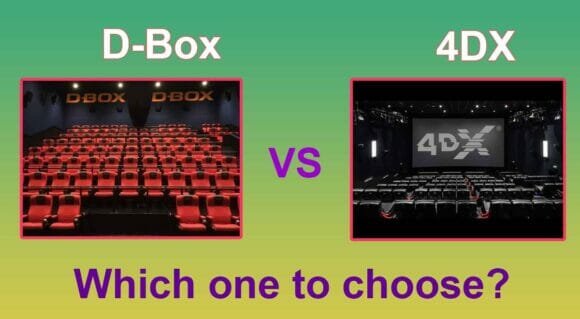
Alright, let's talk about D-Box and 4DX. They're trying to turn a trip to the pictures into a proper experience these days, with moving seats and even a whiff of burnt rubber. But which one genuinely enhances the film, and which is just a gimmick?
Alright, let's talk about D-Box and 4DX. If you're anything like me, you probably grew up with the idea that going to the cinema meant sitting in a dark room, munching on some overpriced popcorn, and just watching a film. Simple. But these days, they're trying to turn a trip to the pictures into an experience. And I mean a *proper* experience. Moving seats, wind in your hair, even a whiff of burnt rubber – it's all happening. I've been going to the pictures since I was a nipper, way back when Dolby Stereo was the bee's knees. Saw *Star Wars* in '77, blew my socks off, even if the bass was a bit flabby by today's standards. Fast forward forty-odd years, and we've got these immersive cinema technologies trying to push the boundaries even further. D-Box and 4DX are the two main contenders you'll see cropping up in bigger multiplexes these days. Both aim to get you *into* the film, not just watching it, but they go about it in pretty different ways. And, as you'd expect from someone who's spent decades tweaking crossovers and listening for cabinet resonance, I've got opinions on both. ### Quick Verdict **4DX offers a more bombastic, sensory overload, while D-Box is more refined and integrated motion.** ### Who it's for: * **4DX:** Adrenaline junkies, those who love theme park rides, families with kids who fidget, anyone who thinks movies aren't "exciting enough" anymore, people who just want a bit of a laugh and don't mind a chaotic experience. * **D-Box:** People who appreciate subtle immersion, those who get motion sick easily with aggressive movement, folk who want to *feel* the film's impact without being overwhelmed, discerning viewers who value integration over spectacle. ### Who should skip it: * **4DX:** Anyone prone to motion sickness, people who wear glasses (they might fly off!), those who want to focus solely on the film's narrative, anyone with back or neck issues, those sensitive to strong smells or flashing lights. * **D-Box:** If you expect a full-on theme park ride, if you find subtle vibrations distracting, or if you're on a tight budget and can't justify the extra quid for a less "in your face" experience. ***  *D-Box vs 4DX – A Complete Guide for Moviegoers — tested in the SpeakersMag workshop.* ## What's the Big Idea Behind These Things Anyway? So, you've got your regular cinema experience, right? Big screen, loud sound system, comfy-ish seats. Job done. But the folks behind D-Box and 4DX reckon that's just not enough anymore. They want to add another layer, another dimension, if you will. It's about making the film physically interactive. Think of it like this: your speakers handle the sound, your screen handles the visuals, and these systems handle the *feelings*. Or at least, the physical sensations associated with what's happening on screen. They both work by syncing up specific effects with the film. A car chase? Your seat rumbles and pitches. A spaceship blasting off? You feel the G-forces. Rain on screen? You might just get a sprinkle. It's all designed to trick your brain into feeling like you're actually *there*. And it works, to varying degrees. The question is, which one does it better, and which one is actually worth your hard-earned cash? ## D-Box: The Subtle Shaker D-Box, for me, is the more understated of the two. It's been around a while, and it focuses primarily on motion. You're sitting in a seat that's essentially a sophisticated motion simulator. These aren't just glorified massage chairs, mind. They've got actuators that can pitch, roll, heave, and vibrate with some real precision. The idea is that the motion is subtle, responsive, and designed to enhance the film without pulling you right out of it. I first tried D-Box a few years back, saw *Dune* actually. Figured it was a good test, all those sandworms and ornithopters. I was pleasantly surprised, I'll admit. The rumbling of the Sandworms felt genuinely weighty, not just some generic buzz. When the ornithopters swooped, you got a real sense of elevation and drop. It wasn't over the top; it was integrated. Like the film's sound design, but for your backside. ### How D-Box Works (The Nitty Gritty) Each D-Box enabled film has a special motion code track, much like a separate audio track. This code tells your seat exactly what to do and when. It's all synchronised down to the frame. The seats themselves typically have three or four axes of motion. You've got pitch (forward and back), roll (side to side), and heave (up and down). Some have a bit of a vibrate function too, though it's nowhere near as aggressive as 4DX's equivalent. The D-Box system prides itself on its subtlety. The movements aren't meant to throw you around like a rag doll. Instead, they're designed to mimic the G-forces, impacts, and directional shifts you'd experience if you were in the scene. A punch in a fight scene? You'll feel a sharp jolt. A car cornering fast? Your seat will tilt into the turn. It's quite clever, really, and definitely a cut above those old theme park rides where the seats just jolted randomly. Crucially, with D-Box, you often get a control panel on your armrest. This is a brilliant feature, frankly. You can adjust the intensity of the motion from off, to low, medium, or high. So, if you find it a bit much, or if you're just not in the mood for constant jostling, you can dial it back. That level of personal control is something I really appreciate, especially if you're sensitive to motion or you're watching a more dialogue-heavy film where you just want a bit of extra oomph during the action scenes. ### Pros of D-Box: * **Precision Motion:** The movements are generally very well-synced and believable, adding to the immersion rather than distracting from it. * **User Control:** Being able to adjust the intensity is a massive plus. It means you can tailor the experience to your preference, or even turn it off if you need a break. * **Less Distracting:** Because it's primarily motion, it tends to be less intrusive than 4DX, allowing you to focus more on the narrative. * **Suitable for More Genres:** While it shines in action flicks, it can subtly enhance dramas or sci-fi without feeling out of place. ### Cons of D-Box: * **Cost:** It's always going to be more expensive than a standard ticket, and sometimes the premium feels a bit steep for *just* the motion. * **Limited Sensory Input:** If you're after wind, water, and smells, D-Box won't give you that. It's motion only. * **Availability:** Still not as widespread as standard screens, so you might have to travel a bit further to find a cinema with it. * **Can Be Missed:** If the motion is *too* subtle, some might feel they didn't get their money's worth. *** ## 4DX: The Sensory Assault Now, 4DX is a whole different beast. If D-Box is a finely tuned instrument, 4DX is a full-blown orchestra firing on all cylinders. This system doesn't just do motion; it throws everything *and* the kitchen sink at you. We're talking moving seats, wind effects, water sprays, flashing lights, fog, bubbles, and yes, even smells. It's designed to be a full-body, full-sensory experience that aims to place you squarely in the middle of the film. My first taste of 4DX was a bit of a shock, I won't lie. I went to see one of the *Fast & Furious* films – seemed appropriate for a sensory overload. From the moment the engines revved, I was being shoved, vibrated, sprayed with water (thankfully, they give you a button to turn the water off, which I quickly found), and had wind blowing in my face. It was certainly an *experience*. Whether it was a *better cinematic* experience is another matter entirely. It felt more like a fairground ride than a film. ### How 4DX Works (The Full Monty) Like D-Box, 4DX films also have a coded track. But instead of just controlling the seats, this track controls a whole array of environmental effects installed in the cinema auditorium itself. The seats themselves are usually group together in blocks of four, all moving in unison. They can pitch, roll, heave, and vibrate, often more vigorously than D-Box seats. On top of that, each seat usually has a "back tickler" or "leg tickler" – little air jets that give you a poke or a simulated punch. Some even have a subtle air blast around your neck or ears, to mimic things flying past. Then you've got the environmental effects: fans for wind, water sprinklers for rain or splashes, strobe lights for lightning or explosions, smoke machines for fog or fire, and even scent machines that pump out various smells (burnt rubber, gunpowder, coffee, flowers – you name it). It's a lot. And it's relentless. Where D-Box tries to integrate, 4DX often feels like it's trying to *dominate* your senses. It's less about subtle enhancement and more about "Look what I can do!" The thing about 4DX is that there's usually no individual control panel on your seat, apart from a small button to switch off the water sprays. So, you're along for the ride, whether you like it or not. If a particular effect is annoying you, tough luck. You're stuck with it. This lack of control can be a real downside, especially if you're prone to sensory overload or find certain effects jarring. ### Pros of 4DX: * **Ultimate Immersion (for some):** If you love being thrown into the action, the combination of motion and environmental effects can be very engaging. * **Novelty Factor:** It's certainly a unique experience and can be a lot of fun, especially for a first-timer or with a group of friends. * **Exciting for Kids:** Children often absolutely love the chaotic, interactive nature of 4DX, treating it like a theme park ride. * **Bombastic Experience:** If you want a film to feel *big* and loud and tactile, 4DX delivers on that front. ### Cons of 4DX: * **Overwhelming/Distracting:** For many, the sheer volume of effects can be too much, pulling you out of the film's narrative rather than drawing you in. * **Can Be Uncomfortable:** The aggressive motion, back pokes, and unexpected sprays can be genuinely uncomfortable or even startling. * **Hygiene Concerns:** Shared water sprays and air blasts in a public cinema? Some people definitely have reservations about the cleanliness. * **Motion Sickness Risk:** A high probability for those prone to motion sickness. I've seen a few people look a bit green around the gills after a particularly intense sequence. * **Cost:** Often significantly more expensive than a standard ticket, and sometimes more than D-Box. * **Glasses Beware:** Seriously, if you wear glasses, hold onto them. I've seen a few pairs take flight! *** ## The Head-to-Head: D-Box vs. 4DX Right, let's lay them out side-by-side. I've had good and bad experiences with both, but they are aiming for very different outcomes, despite both wanting to "immerse" you. | Feature | D-Box | 4DX | | :---------------- | :--------------------------------------- | :----------------------------------------------------- | | **Primary Focus** | Precise Motion | Multi-sensory Environmental Effects + Motion | | **Motion Type** | Subtler, targeted, three/four-axis | More aggressive, often group-based, multi-axis | | **Other Effects** | Minimal (some vibration) | Wind, water, fog, scents, strobe lights, seat "ticklers" | | **User Control** | Yes, intensity control (off/low/med/high) | Limited (usually just water off) | | **Immersion Style** | Integrated, enhances visuals & audio | Bombastic, often dominates senses | | **Comfort** | Generally more comfortable, adjustable | Can be uncomfortable, jarring, or startling | | **Distraction Level** | Low to Medium | High, can pull focus from film | | **Price Premium** | Moderate | High | | **Best For** | Discerning viewers, action films, sci-fi | Thrill-seekers, theme park lovers, kids | | **Worst For** | Those expecting a theme park ride | Motion sickness sufferers, those easily distracted | ## Robert's Take: Which One Would I Go For? Honestly, it depends on the film and what mood I'm in. But if I'm putting my audio engineer hat on, the one that *enhances* the experience without utterly overwhelming it wins. For me, that's D-Box. See, the thing with 4DX is that it's often just *too much*. It's like someone's turned every knob up to eleven. You've got a whisper of a breeze on screen, and suddenly a gale is blowing through the auditorium. A small splash, and you're getting a misting. It constantly reminds you that you're in a cinema with special effects, rather than letting you forget where you are and just getting lost in the story. I find myself bracing for the next jolt or splash, which pulls me right out of the narrative. D-Box, on the other hand, feels more like a really well-implemented haptic feedback system. When a speaker's doing its job right, you don't notice the speaker itself, you just notice the incredible soundstage and the clarity of the music. D-Box, at its best, works in a similar way. The motion integrates with the film's sound design and visuals, adding impact and weight without shouting about itself. The fact that I can adjust the intensity is key. If I'm watching something a bit more nuanced, I can dial it down. If it's an all-out action flick, I can crank it up and enjoy the ride. I've taken my grandkids to 4DX once or twice, and they absolutely loved it. For them, it was part of the fun, a bit of a laugh, an event. But for me, someone who appreciates the craft of filmmaking and sound design, it often feels like a gimmick that detracts from the art. It's a fun novelty, sure, but not something I'd regularly shell out the extra cash for. I reckon the future of these things, if they're going to stick around, needs to lean more towards the D-Box philosophy. Subtlety, precision, and integration. Not just throwing everything at the wall and seeing what sticks. You want to *feel* the bass from a massive explosion, not have a jet of air blow past your ear at the same time. It's about complementing the film, not competing with it. ## Value for Money: Is the Premium Worth It? This is where the rubber meets the road, isn't it? Both D-Box and 4DX tickets come with a hefty premium over a standard cinema ticket. We're talking an extra five to ten quid, sometimes more, on top of already rising ticket prices. For a family of four, that's a serious chunk of change. For D-Box, I'd say it's often worth the extra few quid for an action-heavy film where you want that added physical impact. The control over intensity means you're more likely to enjoy it, and it generally adds to the experience without ruining it. It's like getting a slightly better seat with a bit of a rumble pack built in. For 4DX, it's a harder sell for me personally. If you absolutely love theme park rides and want that level of excitement from your cinema trip, then maybe. But if you're going primarily to watch the film and appreciate the storytelling, the constant bombardment of effects can be counterproductive. It's more of a "once in a blue moon" treat, or something to do with the kids if they're gagging for it. For the serious film-goer, the extra cost often doesn't translate into a *better* cinematic experience, just a more *intense* one. Think about it like this: would you pay an extra tenner for a concert ticket if they were going to spray you with water every time the drummer hit a cymbal? Probably not. You want to hear the music clearly, feel the bass, and enjoy the performance. These cinema technologies are meant to be an extension of the storytelling, not a distraction from it. ## My Top Tips for Trying Them Out If you're curious – and you should be, it's worth experiencing at least once – here are a few bits of advice from someone who's seen a fair few films in these setups: 1. **Pick the Right Film:** Go for something action-packed, a big blockbuster. Think superhero flicks, sci-fi epics, car chases, or war films. A quiet drama or a romantic comedy just won't cut it and will highlight the gimmicky nature. 2. **Start with D-Box:** If you're new to this whole motion cinema thing, D-Box is a gentler introduction. You can adjust the intensity, and it's less likely to overwhelm you right off the bat. 3. **Sit Centrally:** As with any cinema experience, a central seat often gives you the best perspective. For 4DX, this might mean you get a better blend of the environmental effects. For D-Box, it just means you're in the sweet spot for viewing. 4. **Consider the Cost:** Budget for the premium. Don't go in expecting a cheap night out. These are luxury experiences, and they're priced as such. 5. **Leave the Precious Stuff at Home (for 4DX):** Seriously, if you've got a fancy handbag, expensive glasses, or anything you don't want getting jostled or potentially damp, leave it at home or secure it well. Pockets with zips are your friend. 6. **Use the Water Off Button:** For 4DX, locate that little button on your armrest to turn off the water. Trust me, you'll thank me later. Unless you *really* want to be sprayed. *** ## FAQ: Your Burning Questions Answered ### Q: Can D-Box or 4DX make you sick? A: Absolutely, yes. Especially 4DX. The aggressive, sudden movements, combined with flashing lights and sometimes odd smells, can trigger motion sickness in sensitive individuals. D-Box is less likely to, especially if you dial down the intensity, but it's still a possibility if you're very susceptible. ### Q: Are D-Box and 4DX seats comfortable? A: They're usually fairly well-padded, but the constant motion can make them less comfortable than a static, plush cinema seat. 4DX seats, in particular, can feel a bit rigid due to all the tech packed into them, and the "tickler" effects can be quite intrusive. D-Box seats are generally a bit more refined. ### Q: Is it worth the extra money for kids? A: For younger kids, particularly, 4DX can be a huge novelty and a lot of fun, turning a film into an adventure park ride. They often don't mind the distractions. For older kids or teenagers, it might depend on their tolerance for constant stimulation. D-Box is generally a safer bet for a more grown-up experience that still adds excitement. ### Q: Do they always have all the effects on for 4DX? A: Generally, yes, if the film is coded for it. The only thing you can usually turn off is the water spray. The wind, fog, smells, and motion are all part of the programmed experience, and you're along for the whole ride, whether you like every effect or not. ### Q: Can you eat and drink in D-Box or 4DX screenings? A: You can, but it's often a challenge, especially in 4DX. Spills are a common occurrence with all the jostling and moving. I'd recommend sticking to drinks with secure lids and snacks that aren't too messy. Forget a big tub of nachos in 4DX – you'll be wearing most of it by the end. *** ## Final Word So, D-Box and 4DX. Two distinct takes on interactive cinema. One aims for sophisticated immersion, the other for an all-out sensory assault. Both have their place, I suppose, depending on what you're after from your trip to the flicks. For my money, if I'm going to shell out the extra cash, I want an experience that complements the film, not competes with it. That's why D-Box often gets my nod. It feels like an extension of the filmmaker's vision, rather than a theme park ride bolted onto a movie. But hey, if you love a bit of chaos and don't mind a spray of water now and then, 4DX might just be your cup of tea. Just remember to hold onto your popcorn, and maybe your glasses too! At the end of the day, these technologies are trying to give us something more than just a big screen and loud speakers. They're trying to make cinema an event again. And while I'm a firm believer that a well-mixed soundtrack and a beautifully shot picture are often all you need, it's interesting to see how far they're willing to push it. Just don't forget the basics, eh? Good sound, clear picture, and a story that grabs you. All the wind and water in the world won't fix a rotten script. Now, where did I put my screwdriver? I've got a crossover to tweak...